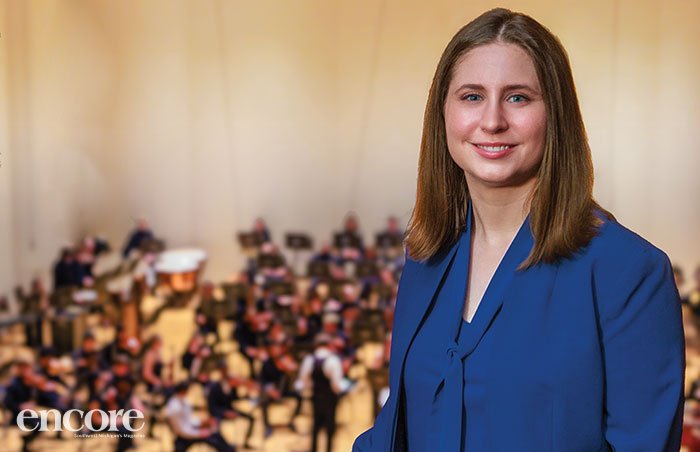
Just a month before school resumed this year, Kalamazoo Public Schools Superintendent Dr. Darrin Slade received a vote of confidence when the KPS Board of Trustees unanimously voted to extend his contract through 2031.
In supporting the move, trustee Carol McGlinn said, “We appreciate the work that you’ve done for the district and the improvements made.” Trustee Takisha Johnson lauded “a superintendent who puts forth effort that I’ve never seen before.”
It’s effort that is paying off, if recent accomplishments made by the district are any indication. In 2025, the district boasted its highest ever graduation rate of 77%, which was an 11.5% increase over the previous year. In addition, state assessment scores are up, as is attendance.
Slade says the district’s focus on student achievement, its close monitoring of students’ progress and implementation of individual plans for students not meeting standards as key to the improvements. Improved attendance, discipline and removing phones from classrooms have also contributed.

And Slade is quick to share credit for these improvements.
“We have extremely strong teachers in Kalamazoo, and I have an extremely strong senior leadership team. I mean a superstar team, so all of the progress we’re making is as a result of the whole entire district. It’s a team effort, including our parents and our community and the school board.”
Slade, 57, spent his early career years in the Baltimore and Washington, D.C., school districts before heading to the Midwest for posts in Missouri, and he is forthright when asked why he wanted to come to Kalamazoo.
“I wanted to be a superintendent,” he says, noting that he was encouraged on his ascending path by an early mentor.
“My assistant superintendent in D.C. kept saying to me, ‘Based on your skill set, you should be a superintendent.’ And my skill set even then was improving student outcomes in reading, math, attendance and graduation rates.”
Slade was hired in 2023 after a six-month nationwide search following the resignation of Rita Raichoudhuri in December 2022.
KPS Board President TiAanna Harrison recently weighed in on what stood out to her during the 2023 superintendent search.
“During his interview, he said, ‘I look at all students like they are my own.’ That statement stayed with me because it reflected the kind of student-centered leadership I believed KPS needed. I also appreciated that he wasn’t presenting himself as someone who would simply sit in the superintendent’s office and manage the district from there. He talked about being visible, talking with families, listening to staff and students, looking at the data, and being willing to have difficult conversations.”
He secured a three-year contract and a $230,000 annual salary, 3% higher than Raichoudhuri’s but less than he was offered. “I felt I needed to prove myself before I could accept that kind of money,” Slade says.
It seems Slade is walking the talk. Each day he visits five KPS schools. As soon as he took on the superintendent role, Slade made student attendance his No. 1 priority, visiting the families of students who were chronically absent to get to the heart of the matter and problem solve. Attendance has improved in every school across the district for the past two years.
In 2025, the school board approved a salary increase for Slade of $48,436 and a five-year contract (through 2030). Today, Slade manages a district with a budget of $216 million, a student body of 12,276 and an instructional staff of 767 teachers.
His path to Kalamazoo
Slade grew up in a suburb of Baltimore, the son of a schoolteacher and a municipal housing supervisor.

“Education was always important in my house. My brother and I had to be good students. I was a C student or above in high school, and an athlete — I played football, ran track and wrestled. I became a much better student at the college level because I started taking education more seriously,” Slade says, adding that he never expected to become an educator.
“Both my mother and my aunt were teachers in the Baltimore Public Schools, and I used to visit their classrooms. I went to Catholic elementary school, so if my school was closed, I would go to their classrooms. I remember thinking I never wanted to be a teacher, so I always tell folks, ‘You never know where you’re going to end up.’”
He admits he had “no plan whatsoever” when he started college.
“I came from a home where you had to go to college, so I went to college without any idea what I wanted to do,” he says, adding that his family instilled in him “a love of doing your best, a love of giving 100%.”
After earning a bachelor’s degree in political science from Towson State College (now Towson University), Slade worked as a mail carrier for a time in Baltimore’s urban center, in “some of the roughest neighborhoods you can imagine,” he says.
“I wanted to work for the federal government in D.C, but there was a federal hiring freeze. At some point, my mother said, ‘Go teach for one year, and then the freeze will be up.’ Those were the times when folks without education degrees were being hired (to teach),” Slade says. “So I started teaching elementary school, and from day one I loved it. I was hooked and never looked back. I was probably the youngest teacher in the building, and I later ended up being the youngest assistant principal in the district, at age 27.”
Slade taught elementary school for six years in Baltimore Public Schools, a period during which he earned a master’s degree from Johns Hopkins University. He then served as a middle school assistant principal for five years. He moved on to the Washington, D.C., school system, serving as a principal at various schools, from elementary through high school, for nearly 16 years. All the while, he was working toward a master’s degree in executive leadership from Georgetown University and a Ph.D. in educational leadership from the University of Maryland.
“I never stopped working to go to school — I always went to school at night. I worked on my doctorate for nine years, and I was a principal the whole time. I understand the concept of work-life balance, but for me the job has always been a big part of my life.”
In his sparsely furnished office at the KPS Administration Building, one of the few pieces of furniture other than Slade’s simple table-like desk is a wall of bookshelves with items that reflect some of his past. There’s a photo of his late wife with their son Darius, now 29, after he was born, not far from an award from the Michigan Association for Superintendents & Administrators naming him the Region VII Superintendent of the Year for 2024–25. A large framed photo of Slade with U.S. President Barack Obama sits atop the shelves.
“When I was in D.C., he (Obama) came to Ron Brown Middle School, which was highly recognized for student achievement and attendance, visiting for a Martin Luther King Day celebration,” Slade recalls. “He wanted to talk to me alone, so he came into my office, and it was just me and him in my office for five minutes. My son happened to be there, so I had him come in and take a picture.”
Being visible and hands-on

©2026 Encore Publications / Brian K. Powers
Behind his desk is a simple board where he has pinned meaningful reminders of his time so far at KPS: a copy of an article about improved graduation and attendance rates, a thank you letter from a student.
Early in his Kalamazoo tenure, Slade became known for being visible in the district’s school buildings and involved with individual students and families. When a student has a discipline or attendance problem, Slade will call their families and even visit their home to have a personal conference, meetings that sometimes include Board President Harrison.
“Rather than sit in an office and ask why a child isn’t coming to school, he is willing to go to the family’s home and have a conversation to try and understand what is happening. What is keeping this student from getting to school? What does the family need? What barriers are they experiencing? And what can KPS do to help?” Harrison says.
“I remember one family where you could immediately see that this wasn’t simply a matter of a parent not caring about attendance. There were circumstances that we needed to understand. Dr. Slade’s first instinct wasn’t to lecture. It was to listen and ask, ‘What can we do to help?’ He is willing to literally meet families where they are … He doesn’t expect families to come all the way to the district office.”
Slade also makes a point to visit schools on a regular basis.
“I have a goal of visiting five schools a day, and I’m in classrooms multiple times during the week, working with students directly, specifically on math. Last summer I taught summer school — a third-grade math class,” Slade says, reporting that he wore a suit to class every single day.
On one day in early October, Slade visits Milwood Elementary School, where children greet him in the hallways. He stops in each first-grade classroom, telling them he will be bringing them a special lunch the next week as a reward for being able to write both their first and last names. The kids emit excited “ooohs.”
“It’s important you can write your first name but also your last name,” he tells them, “because that is how people will know you.”
He then moves to a third-grade classroom to say hello, leaning down to talk individually to a couple students about their work. On his visits he will engage the students, sometimes doing math problems with them, other times, for the youngest learners, having them pull letters out of a bag and tell him what they are.
“Teaching is a very hard job,” Slade says. “One of the hardest jobs I’ve ever had, so I have utmost respect for our teachers because I know how hard they work.”
Milwood Elementary School Principal Tammo Nelson notes that when Slade visits the classrooms, he does more than just observe.
“Our first-grade students were very excited that Dr. Slade took time out of his day to connect with them academically. During his visit, students had the opportunity to practice writing their first and last names, counting and identifying letters,” Nelson says. “They were even more thrilled when he brought them lunch from a local restaurant. It made the learning experience feel extra special and memorable for our young learners.”

©2026 Encore Publications / Brian K. Powers
Building for the future
Outside the classroom, Slade has overseen numerous capital improvements to the district.
Prior to the new school year, two notable events for the district received news coverage. In June, an $8.5 million district kitchen opened to better manage the more than 2.5 million student meals a year prepared by the district’s food service. The 17,172-square-foot facility at 6750 Chime St. provides central storage, production, distribution and catering space for the 6,500 breakfasts, 9,000 lunches, 400 dinners and afternoon snacks provided for students at 40 locations each school day. The district says the new kitchen allows for more scratch-made recipes with fresher food, menu variety and consistency and use of local ingredients. The upgrade is expected to save money and reduce food waste. Initially included in the district’s 2018 bond issue, the project was delayed due to Covid-19-related supply chain issues.
In July, the district broke ground on a new home for El Sol Elementary School, a $54.4 million project at 1428 Baker Drive. The 75,000-square-foot facility will expand the school’s dual-language Spanish-immersion program from K–5 to K–8, add an outdoor learning lab and soccer field, and provide separate bus and parent drop-off areas. The project is funded by a 2022 bond issue and is expected to open in September 2028.
Slade notes the dependable support for education from voters over the years.
“The Kalamazoo community has a history of passing bond proposals, and it shows that this community knows how important education is and how important it is for students to learn in state-of-the-art facilities,” he says.
“When you talk about improvement, you’re talking about students’ lives. If a student can’t read and do math, it impacts them for the rest of their life. Not all of our students may grow up in a home where the importance of school and education is being preached, so it’s our job to message that when they’re in school. You give your best effort, you work hard, and you normally find success.”
Points of pride
Slade is ready with facts and statistics about the district’s improvements during his three-year tenure. He has internalized them and needs no notes to elaborate.
“We have raised our student performance on state assessments and our attendance numbers. Our schools are more safe and orderly now. We introduced weapon detectors in the middle and high schools, and that has reduced fights and other incidents. When I’m in Walmart or Meijer, I will have parents come up to me and say, ‘The schools are much safer than previous years.’
“We’ve also made incredible improvement over the last three years, raising our graduation rate to 77%. I’m very proud of that, and of the fact that our teacher retention rate is probably the highest in the history of the district.”
With four more years on his current contract, Slade is not resting on his laurels. A “believer in continuous improvement,” he says he is “always thinking about what we can do better tomorrow for our students.”
“We need our young people to be able to compete in a society that we can’t even imagine how advanced it’s going to be. Things change every day. You can never relax. You can never be complacent,” he says.
“All of our students are improving — white, Black, male, female, Hispanic, students with special needs. But this doesn’t happen without hard work. So the hard work will continue. This is not easy work, but it’s important work.”